
Silver Gilt Medal winner at the RHS Malvern 2026 for Life on the Land
Life on the Land
RHS Malvern Spring Festival 2026 - Designed by Madeline Mesias - as seen on BBC Gardeners’ World.
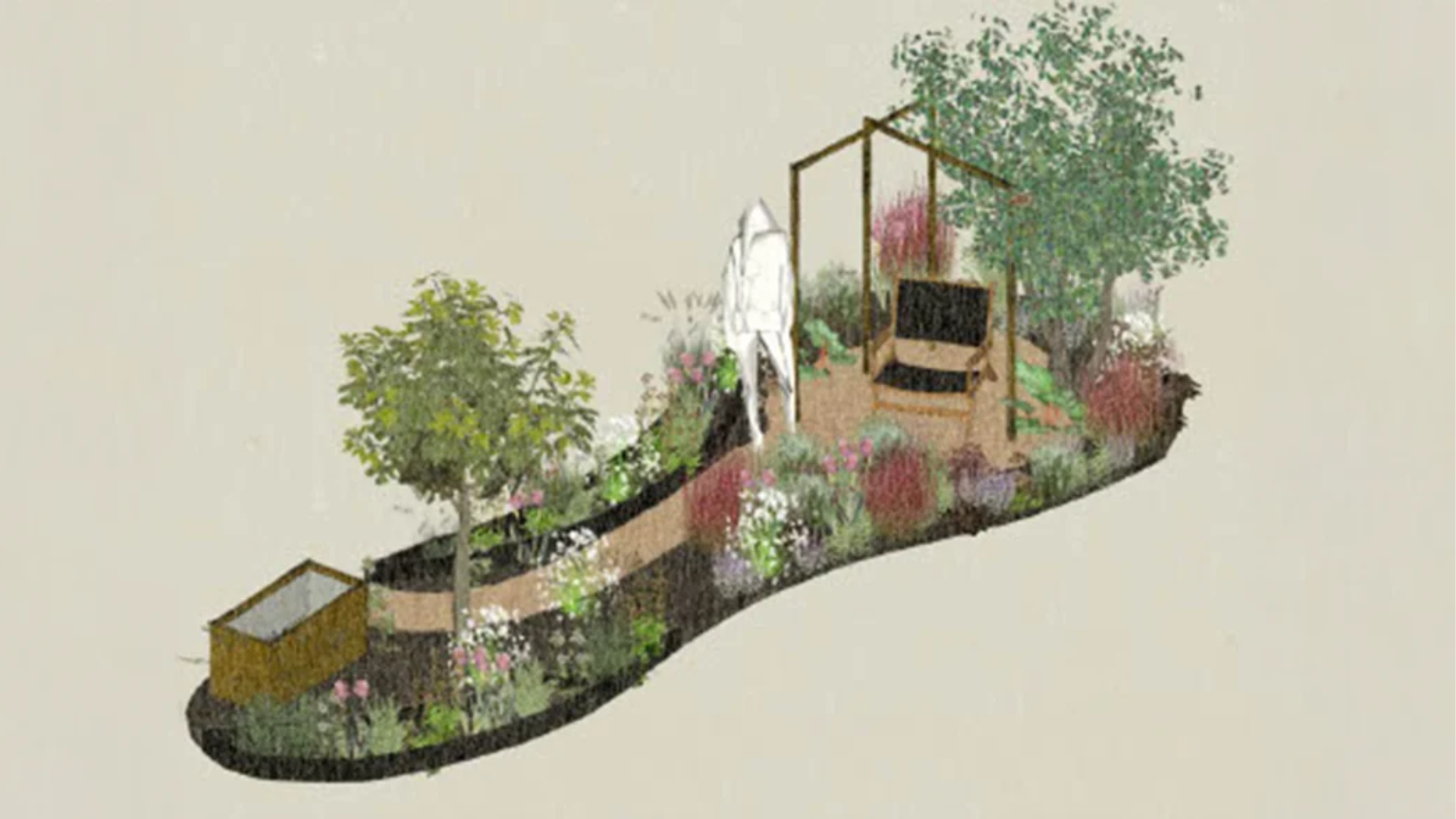
Madeline Mesias, founder of Mesias Design Studio, designed Life on the Land for the RHS Malvern Spring Festival 2026.
The garden reflects on our relationship with food and the land it comes from, bringing attention back to the soil and the processes that sustain it.
Rooted in the ethos of the studio, the project explores how landscapes can support nature, families, and wellbeing, while quietly improving the way people live.

The Concept
Life on the Land responds to a modern disconnect between people and the food they consume. In a world where produce often travels long distances, the garden brings food back to the place it belongs - the soil.
The design reflects the richness of fertile earth through a restrained palette of deep purples, dark foliage, and structural elements, highlighting the importance of what happens below the surface as much as what is harvested above it.
It is a space shaped by both practicality and reflection, encouraging a closer relationship with food, seasonality, and the natural processes that support everyday life.
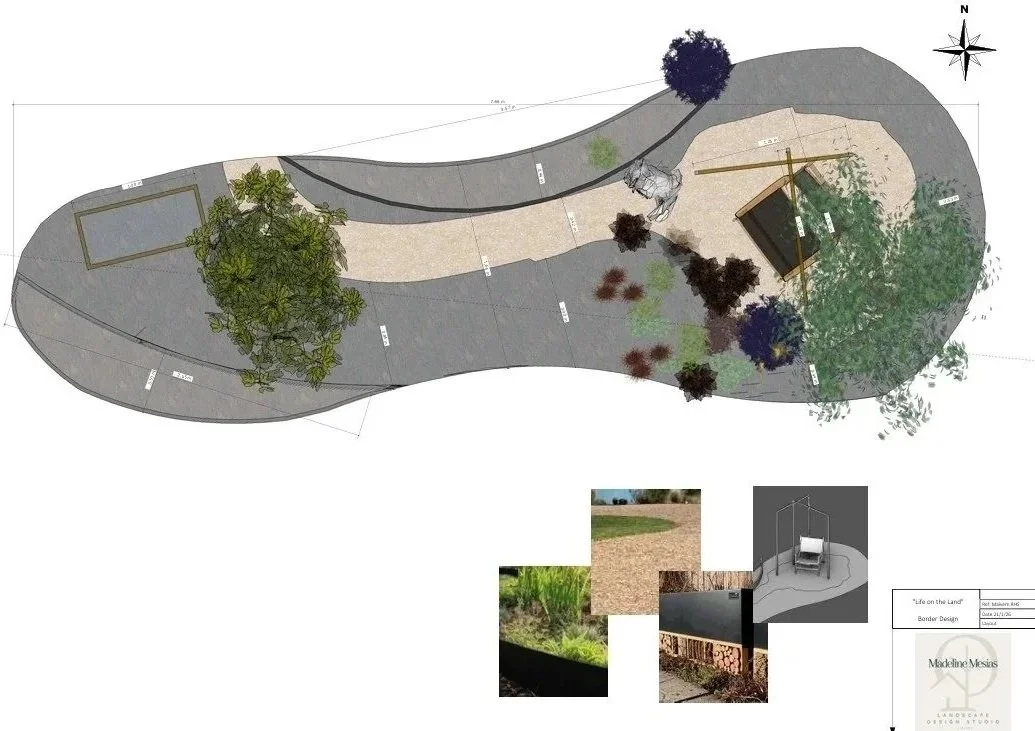
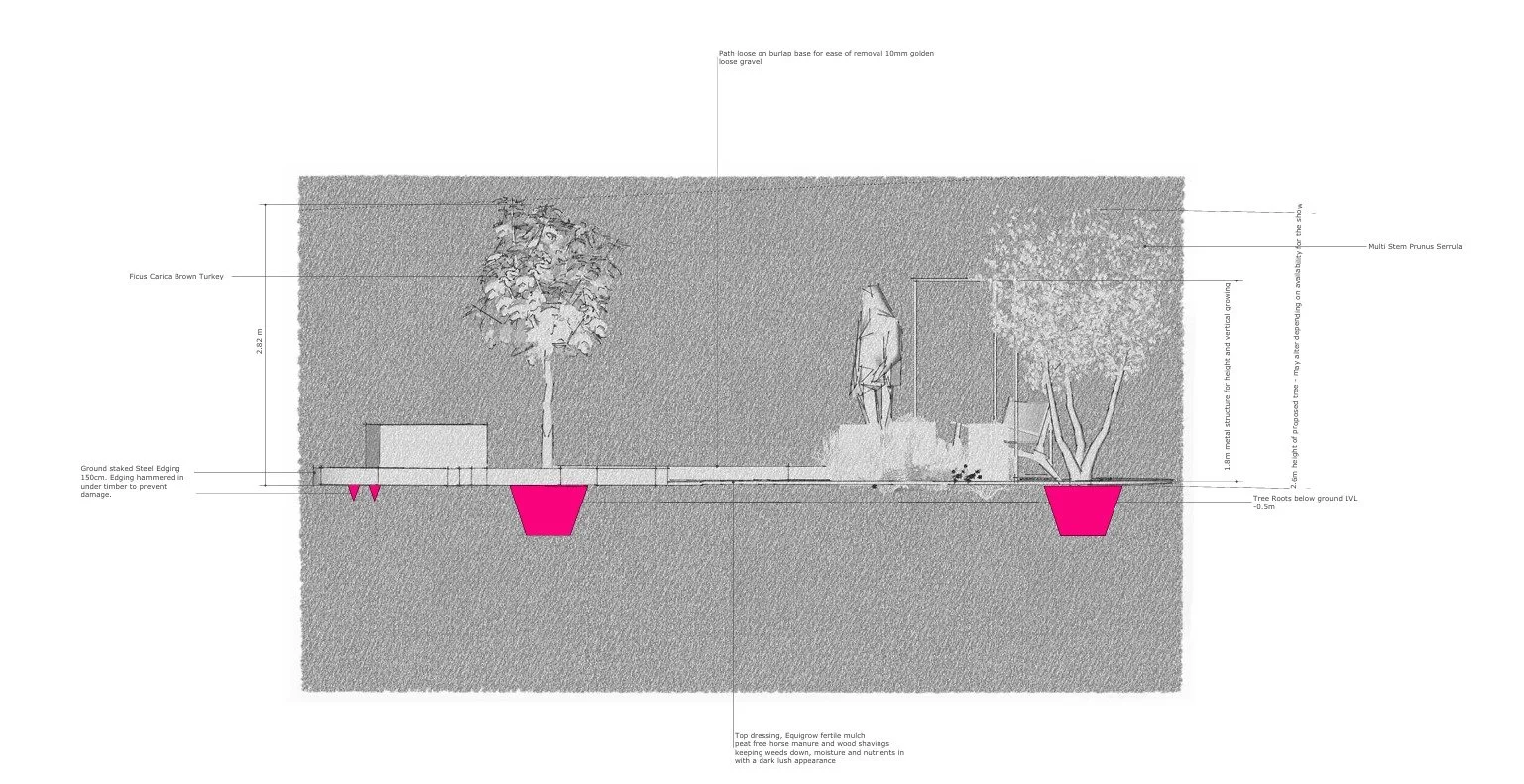
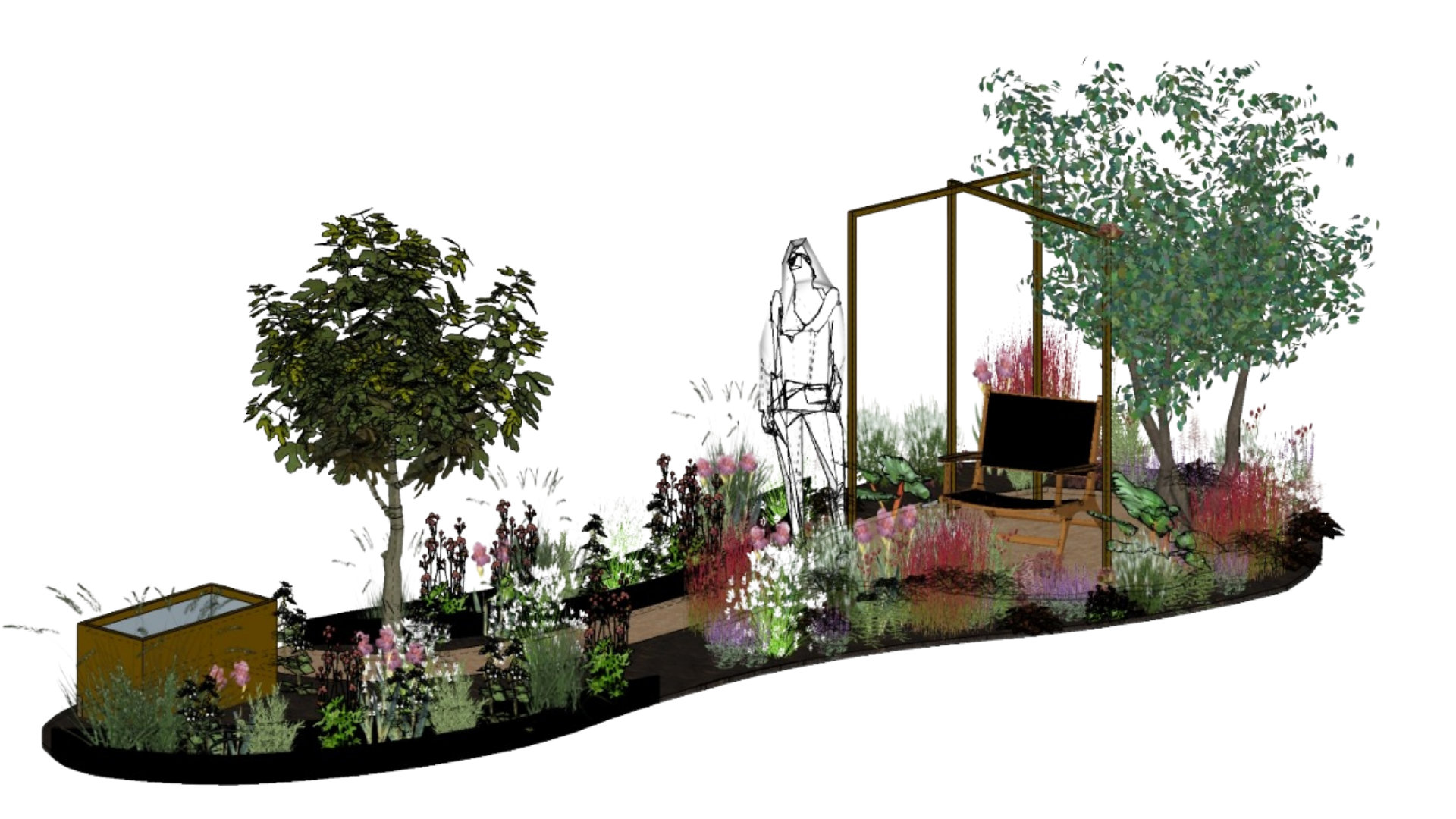
The garden is arranged as a flowing, linear border that guides visitors through a sequence of spaces rather than a single viewpoint.
A gently curving path leads through the design, creating movement while defining distinct areas within the border.
The space is conceived as part of a domestic setting, designed for a keen gardener with a strong aesthetic sensibility and a love of food, offering somewhere to reflect, restore, and nourish.
The Layout
Planting Approach
The planting is naturalistic in style, combining perennials, grasses, and edible crops within a cohesive and carefully considered scheme.
Rather than separating productive and ornamental planting, the design integrates vegetables, herbs, and flowers throughout the border, allowing them to coexist in a way that feels both natural and intentional.
A restrained palette of deep chocolate, purple, and white tones creates visual cohesion, while supporting biodiversity and encouraging a garden that is alive, evolving, and productive.
Edible and Ornamental Integration
Productive planting is woven throughout the garden, reinforcing the connection between the garden and the kitchen.
By bringing edible plants closer to the home and integrating them within the border, the design encourages everyday interaction with food growing, making it more accessible and less intimidating.
Even small harvests contribute to a greater understanding of the care, time, and skill involved in growing food, fostering reduced waste, improved flavour, and a deeper appreciation of what we eat.
Planting Highlights
The planting scheme balances structure, movement, and seasonal interest, drawing on both ornamental and edible species to create a layered and dynamic composition.
Key ornamental planting includes grasses such as Stipa arundinacea, alongside structural trees like Prunus serrula, and perennials including Astrantia major and Iris ‘Benton Caramel’, chosen for their form, texture, and contribution to the overall palette.
Edible planting is fully integrated within the scheme, with crops selected for both visual impact and resilience. Varieties such as red-leaved spinach, purple sage, climbing beans, artichokes, tomatoes, and dark lettuces contribute to the garden’s rich colour palette while supporting productivity and seasonal interest.

The Experience
Life on the Land is designed to be experienced gradually. As visitors move through the space, planting, structure, and materiality reveal themselves in layers.
The garden encourages pause and interaction, offering a calm and immersive environment that reflects both its practical purpose and its wider message.
The garden reflects a broader approach to design that prioritises connection - between people and nature, food and landscape, and beauty and function.
It challenges the idea that productive growing should be separate from ornamental design, instead proposing a more integrated and intuitive way of gardening that supports both lifestyle and environment.
Contact Us
Want your garden to be a show garden too?
Complete this contact form and see how you can work with Madeline and the studio to make your garden at home as beautiful as the RHS Show Gardens.